
Why finish a brilliant day in the hills feeling like you've just gone ten rounds in a boxing ring? If your current hardtail leaves you feeling beaten up by New Zealand's relentless roots and rock gardens, you aren't alone. Many riders find that while our backcountry trails are world-class, the physical toll of a stiff frame can turn a long mission into a bit of a slog.
Choosing the right full suspension e-bike nz is about more than just extra comfort; it's about gaining the confidence to tackle technical descents that used to feel off-limits. We know the anxiety that comes with choosing the right rig, from worrying about battery range on a massive day out to feeling confused by the Bosch versus Shimano motor debate. You want a bike that handles our unique clay and mud without constant mechanical headaches.
This guide will help you navigate the latest performance tech and suspension setups designed for our local terrain. We'll break down the 2026 regulations, including the 300-watt power limit, and explain how the Cycle to Work scheme such as Wheel Deal can make a premium e-MTB significantly more affordable. It's time to stop surviving the trail and start owning it.
Key Takeaways
- Learn why a full suspension e-bike nz is the benchmark for tackling technical roots and rock gardens while reducing rider fatigue on long backcountry missions.
- Get the lowdown on industry-leading motor systems like Bosch Performance Line CX and Shimano EP801 to match your power needs with the right battery capacity.
- Master the essentials of e-MTB maintenance, including setting your sag correctly and protecting sensitive electronics from water damage.
- Understand the performance gap between hardtails and dual-suspension bikes when it comes to technical line choice and descent stability.
- Discover how expert workshop support and specialised upgrades can extend the life of your bike and keep it performing at its peak.
Table of Contents
What is a Full Suspension E-Bike and Why is it the NZ Standard?
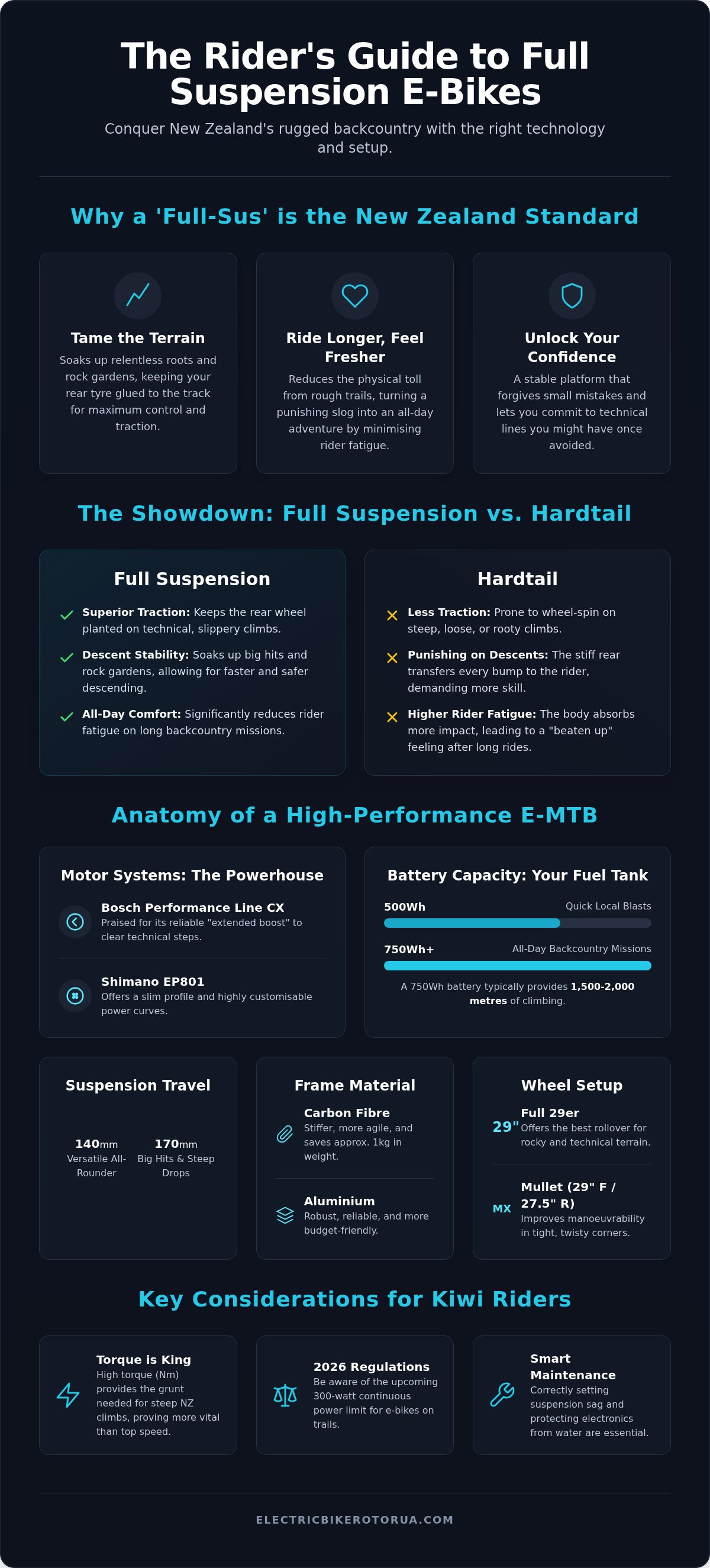
A full suspension e-bike is a mountain bike featuring both front suspension forks and a rear shock, all integrated with a mid-drive motor and battery system. While traditional mountain bikes rely on the rider's legs for every watt of power, these modern machines use advanced electric bicycle technology to assist your pedalling. In New Zealand, the dual-sus setup has quickly become the gold standard. Our trails aren't known for being smooth or manicured. From the greasy roots of Rotorua to the jagged schist of Central Otago, the terrain demands a bike that can soak up the hits.
The E-Factor is the real game-changer here. It turns those soul-crushing fire road climbs into a core part of the adventure. You're no longer just surviving the uphill to get to the descent. Instead, you're attacking technical climbs with a grin. There's a common myth that a full suspension e-bike nz is only for hardcore enduro racers or those "cheating" the hills. That couldn't be further from the truth. These bikes are actually the ultimate equaliser; they make rugged backcountry accessible to anyone who wants to explore further and stay out longer.
The Evolution of the E-MTB in New Zealand
We've come a long way from the clunky, heavy prototypes of a decade ago. The 2026 models we see today feature sleek, integrated batteries and motors that are almost invisible to the naked eye. This evolution has fundamentally changed how Kiwis access the trails, allowing riders to explore epic views, remote huts and ridgelines that were previously a multi-day hike away. Dual suspension effectively closes the confidence gap for intermediate riders by providing a stable, predictable platform that masks small mistakes on the trail and increases comfort in the saddle.
Key Terminology: Travel, Torque, and Traction
Understanding the jargon helps you pick the right rig. Travel refers to how much the suspension can move. A 140mm bike is a versatile all-rounder, while 170mm is built for big hits and steep drops. Then there's torque, measured in Newton-metres (Nm). On steep New Zealand inclines, high torque is far more important than top speed because it provides the grunt needed to clear obstacles from a standstill. Finally, traction is where the rear shock shines. It keeps your rear tyre glued to the track on technical climbs, preventing the wheel-spin that often plagues hardtails when the going gets slippery.
Anatomy of a High-Performance Full-Suspension E-MTB
A high-performance full suspension e-bike nz is more than just a bicycle with a motor bolted on; it's a precision-engineered system where every component must work in harmony. The motor and battery are the heart of the machine, but the frame geometry and wheel setup determine how it actually feels on the dirt. Understanding these technical nuances is vital for any rider looking to invest in a serious rig for New Zealand's demanding conditions.
The debate usually centres on the Bosch Performance Line CX and the Shimano EP801. Bosch is often praised for its "extended boost" which helps you clear technical steps, while Shimano offers a slim profile and customisable power curves. According to recent e-bike safety research, the reliability of these drive units is a key factor in rider confidence, especially when venturing into remote areas. Having a motor that responds intuitively to your pedal input makes the difference between clearing a steep pinch and having to walk.
Battery capacity is measured in Watt-hours (Wh). Think of this as the size of your fuel tank. While a 500Wh battery might suffice for a quick blast around local trails, a 750Wh unit is the standard for all-day backcountry missions. To estimate your range, consider that a typical 750Wh battery provides roughly 1,500 to 2,000 metres of climbing in 'Tour' or 'Trail' mode, depending on your weight and the steepness of the track.
Frame choice often comes down to Carbon versus Aluminium. Carbon offers superior stiffness and saves about 1kg, which makes the bike feel more agile. Aluminium is robust and often more budget-friendly. Wheel size is another critical choice. Full 29-inch wheels offer the best rollover for rocky terrain or taller riders, while 'Mullet' setups (29" front, 27.5" rear) give you better manoeuvrability in tight, twisty corners - or lower standover. If you're unsure which setup fits your style, you can always browse our range of full suspension e-MTBs to see the latest configurations in person, or try out options in our rental fleet.
Bosch eBike Systems: The Gold Standard for Reliability
Bosch motors are a favourite in our workshop because they offer a incredibly natural power delivery that mirrors your own effort. For 2026, the Bosch Smart System features full integration with the eBike Flow app, allowing riders to customise motor behaviour, track activities, and receive over-the-air firmware updates directly from their smartphone. This local serviceability is crucial in NZ; having a motor that can be diagnosed and updated by local experts ensures your bike stays on the trail rather than in the shed. From July 2026, The Gen 5 Motor system can be updated for selected models up to 45kmph.
Full Power vs Lightweight E-MTBs: Which is for you?
The 'Full Power' beast is designed for the 'shuttle-yourself' lifestyle. With 85Nm+ of torque and massive 750Wh+ batteries, these bikes allow you to smash out five laps of a hill in the time it used to take for one. On the other side, the 'SL' or Super Light revolution features bikes weighing under 20kg. These use smaller or lower torque motors (around 35-65Nm) and compact batteries to provide a more traditional, playful MTB feel. It's the difference between having a motorised uplift and having a "bionic" set of legs that just make you feel like a pro on every climb.
Full Suspension vs Hardtail E-Bike: The Ultimate Comparison
Deciding between a hardtail and a full suspension e-bike in nz often comes down to where you plan to spend most of your time. While a hardtail has a rigid frame and front suspension forks, a dual-suspension rig adds a rear shock and a series of pivots to the mix. This mechanical difference fundamentally changes how the bike interacts with the ground. In the context of New Zealand's rugged topography, that extra rear travel isn't just a luxury; it's a tool that extends your riding life by protecting your body from repetitive impacts.
Comfort and fatigue are the biggest factors for the average Kiwi rider. On a four-hour mission through technical bush trails, a hardtail transmits every root, rock, and ripple directly through the pedals and saddle into your knees and lower back. By contrast, a rear shock actively manages those forces. You'll finish a long day feeling refreshed rather than "beaten up." This physical preservation allows you to ride more frequently and tackle more ambitious routes without needing three days of recovery.
There's an old myth that rear suspension "bobs" and wastes your pedaling energy. While this was true for bikes built twenty years ago, modern suspension designs and the "E-Factor" have completely changed the game. E-bike motors easily overcome any minor efficiency losses. In fact, full suspension often climbs better on technical terrain because the rear tyre stays glued to the dirt rather than bouncing off obstacles. This constant contact provides the traction needed to clear slippery clay inclines that would leave a hardtail spinning its wheels.
When to choose a Hardtail E-Bike
Hardtails still have a firm place in the New Zealand market. They are excellent for riders who primarily stick to gravel roads, rail trails, or urban commuting with the occasional foray onto light "Grade 2" forest tracks. Because they have fewer moving parts, they are simpler to maintain; there are no pivot bearings to replace or rear shocks to service. They also offer a lower entry price, making them a sensible choice for those on a stricter budget who don't intend to ride technical mountain bike parks. And of course, there is always an opportunity to upgrade to a suspension 'seatpost' if you just want a little more comfort in the rear.
Why Full Suspension wins on the 'Real' Dirt
Once you move onto "Grade 3" trails and above, dual suspension becomes the clear winner. The increased braking traction is a safety feature often overlooked. When you hit the anchors on a bumpy descent, a rear shock keeps the tyre in contact with the ground, allowing the rubber to bite rather than skipping across the surface. This creates a more stable platform that is incredibly forgiving if you accidentally pick a "bad line" through a rock garden. According to NZ e-bike safety and regulations research, having a bike that remains stable under load is a critical component of rider safety in varied conditions. Whether you're cruising a flow trail or dropping into a steep chute, the extra suspension provides the confidence to push your limits safely.
Setup and Maintenance: Keeping Your Rig Trail-Ready
Owning a full suspension e-bike in nz is an investment in performance, but that performance quickly fades if your setup isn't dialed. Because these bikes carry an extra 4 to 8kg of motor and battery weight, you can't simply copy the settings from your old acoustic mountain bike. Setting your 'sag' is the first priority. Sag is the amount your suspension compresses under your weight while stationary. For a plush yet supportive ride on New Zealand tracks, aim for 25% to 30% sag. Use a dedicated shock pump to adjust the air pressure until the rubber O-ring sits exactly at that mark while you're wearing your full riding kit.
Cleaning your rig requires a bit of restraint. The golden rule is to never use a high-pressure hose or jet wash near the motor, battery ports, or pivot bearings. High pressure forces water and grit past the seals, leading to premature electrical failure or "crunchy" bearings. A bucket of soapy water and a soft brush are all you need to shift the famous Rotorua mud. After washing, pay close attention to your frame pivots. New Zealand's abrasive grit can quickly lead to creaky frames, so check that your pivot bolts are torqued to factory specifications every few rides.
Tyre choice and pressure are your primary points of contact with our varied terrain. On clay-based tracks, you need aggressive side knobs to bite through the slippery top layer. Because e-bike tyres often have stiffer, reinforced casings to handle the extra weight, you can usually run slightly lower pressures than you'd expect. Finding the sweet spot, often between 18 and 25 psi depending on your weight, will provide maximum grip without the tyre squirming in corners. If you need a professional tune-up, book in with our e-bike workshop services to ensure your suspension is perfectly dialled.
E-Bike Specific Drivetrain Wear
E-bike's eat chains. The combination of rider power and motor torque creates immense stress on the metal links, especially if you're shifting while grunting up a steep incline. To save your derailleur and cassette, learn to "shift like a pro" by easing off the pedals for a split second as you click through the gears. For high-use riders tackling rugged NZ backcountry, we recommend checking your chain for stretch every 500km. Replacing a chain early is far cheaper than replacing an entire drivetrain. There are upgrade options here too, geared towards saving weight or increasing strength.
Software and Battery Health
Your bike is essentially a high-powered computer on wheels. Keeping your Bosch or Shimano firmware updated is essential for maintaining motor efficiency and battery range. These updates often include "bug fixes" that improve how the motor responds to your pedaling. Battery storage is also critical in the NZ climate. Avoid leaving your battery in a freezing garage during winter or in a hot car during summer. To maximise your battery's lifespan, try to keep the charge between 20% and 80% when storing it for more than a few weeks.
Why Choose Electric Bike Rotorua for Your Full-Sus Journey?
Finding the right full suspension e-bike in nz involves more than just reading a spec sheet. It requires a partner who understands the grit of the Whakarewarewa Forest and the demands of a Southern Alps mission. At Electric Bike Rotorua, we aren't just another retail chain. We're a team of riders, mechanics, and enthusiasts who build, ride, and service these machines every single day. This hands-on experience means we don't just sell you a bike; we ensure it's the right tool for your specific riding style and local trails.
Our professional workshop serves as a national hub for technical support, particularly for Bosch, Shimano, and aftermarket e-bike systems. Because we specialise in high-performance hardware, we have the diagnostic tools and the specialised parts required to keep your motor and battery in peak condition. We stock premium brands like Focus, Cannondale, Orbea, Aventon and more; ensuring you have access to world-leading geometry and suspension designs. For those looking for a smarter entry point into the world of dual-suspension, we also offer pre-loved e-bikes. These are professionally serviced rigs that provide a high-performance experience without the "brand-new" price tag.
Try Before You Buy: The Rental Advantage
We believe the best way to understand the benefit of a modern e-MTB is to get it on the dirt. Our rental fleet is specifically curated to include the latest technology, allowing you to check out our full-suspension rental options and test them on real trails. If you decide to purchase, our team provides expert fitting and suspension setup to ensure the bike is perfectly balanced for your weight and riding style. This personalised approach eliminates the guesswork and ensures your first ride is a brilliant one.
National Support and Expertise
While our roots are in Rotorua, our expertise reaches every corner of the country. We ship bikes nationwide with "ready-to-ride" professional assembly, meaning your new rig arrives properly tuned and safety-checked. You aren't just buying a box; you're getting a bike that has been through our workshop and is ready for the trail. We also curate a range of specialised parts and apparel specifically chosen to handle New Zealand's unique clay and mud. When you're ready to upgrade your ride, you can browse our current range of Full Suspension E-MTBs and tap into the knowledge of a team that lives and breathes e-mountain biking.
Ready to Own the Trail?
Investing in a full suspension e-bike in nz is the single best move you can make to transform your backcountry riding experience. We've explored how dual suspension saves your body from the physical toll of technical tracks and how the latest motor technology turns soul-crushing climbs into pure enjoyment. It's about gaining the confidence to tackle lines you used to walk and staying out for that extra hour of trail time without the usual fatigue.
At Electric Bike Rotorua, we don't just sell these machines; we live for them. As Bosch and Shimano eBike Service Specialists with an expert mechanical workshop, we ensure every bike we deliver is perfectly dialed for our unique conditions. From professional assembly to nationwide shipping and support, we're here to partner with you for the long haul. We understand the nuances of local terrain and the importance of a rig that stays trail-ready ride after ride.
Explore NZ’s Best Range of Full Suspension E-MTBs and find the rig that matches your ambition. Our team is ready to help you navigate the tech and get you onto the dirt. The tracks have never looked better, so let's get you out there.
Frequently Asked Questions
Are full suspension e-bikes worth it for beginners in NZ?
Yes, they are absolutely worth it because they provide a massive safety net that hardtails simply cannot match. A full suspension e-bike nz helps beginners stay stable on technical Grade 3 trails by soaking up roots and rocks that might otherwise cause a "wash out" or a loss of control. This extra forgiveness builds confidence faster, allowing you to focus on your line choice rather than just trying to stay upright on rougher terrain.
How much does a decent full-suspension e-bike weigh in 2026?
In 2026, a standard "full power" rig typically weighs between 23kg and 26kg depending on the battery size and frame material. If you opt for the newer "Super Light" (SL) category, you can find models weighing as little as 18kg to 20kg. These lighter bikes use smaller motors and batteries to provide a feel that is much closer to a traditional mountain bike while still offering plenty of assistance for the climbs.
Can I ride my full-suspension e-bike in the rain and mud?
You can certainly ride in the rain and mud, as modern systems from Bosch and Shimano are designed with high IP ratings to handle typical wet New Zealand conditions. However, you must avoid submerged water and never use a high-pressure hose for cleaning. After a muddy session, a gentle rinse with a garden hose and a drivetrain degrease are essential to prevent abrasive grit from wearing down your seals and bearings prematurely.
How long does a full-suspension e-bike battery last on a typical trail?
Battery life varies based on rider weight and trail steepness, but a 750Wh+ battery usually provides between 1,500 and 2,000+ metres of total climbing. On a typical undulating forest track, this translates to roughly 4 to 8 hours of riding time in "Trail" or "Tour" mode. If you are constantly using "Turbo" mode on steep inclines, expect that range to drop significantly, likely giving you about 2-6 hours of high-intensity power.
What is the difference between an E-MTB and a regular mountain bike?
The primary difference is the integrated mid-drive motor and battery which provide pedal-assist power between 25 - 45km/h. Beyond the electronics, an E-MTB features a reinforced frame and heavier-duty suspension components specifically designed to handle the extra weight and higher torque. This setup allows you to climb technical sections that would be impossible on a regular mountain bike while maintaining incredible stability on high-speed descents.
Do I need a special rack to transport a full-suspension e-bike on my ute?
Yes, you generally need a specialised rack because a standard bike carrier is not rated for the 25kg weight of a modern e-bike. Most Kiwis prefer direct-hitch, but tow-ball mounted racks, and heavy-duty vertical racks can also safely support multiple heavy rigs without bending or failing. Always check the maximum load rating of your rack and your car's tow-ball capacity before heading out on a long road trip to the trails.
How often should I service my e-bike's rear shock and pivots?
We recommend a basic air sleeve service for your rear shock every 50 hours of riding to keep the seals lubricated and the movement smooth. Your frame pivots should be checked for "play" or creaking every couple of months, especially if you frequently ride in the wet. A full professional overhaul of the suspension internals is typically required every 100 to 200 hours to maintain peak performance and prevent expensive internal damage.
What is the best motor for a full-suspension e-bike in New Zealand?
The Bosch Performance Line CX is widely considered the benchmark for New Zealand conditions due to its 85Nm+ of torque and exceptional local serviceability. It offers a very natural power delivery that works with your pedaling rhythm rather than against it. The Shimano EP801 is also a top-tier choice, offering a slightly slimmer profile and excellent customisation through their mobile app, which is great for riders who like to fine-tune their power curves. Stay tuned for an upcoming article on the Avinox system.
Share:
E-bike for Commuting in NZ: Beat the Traffic!